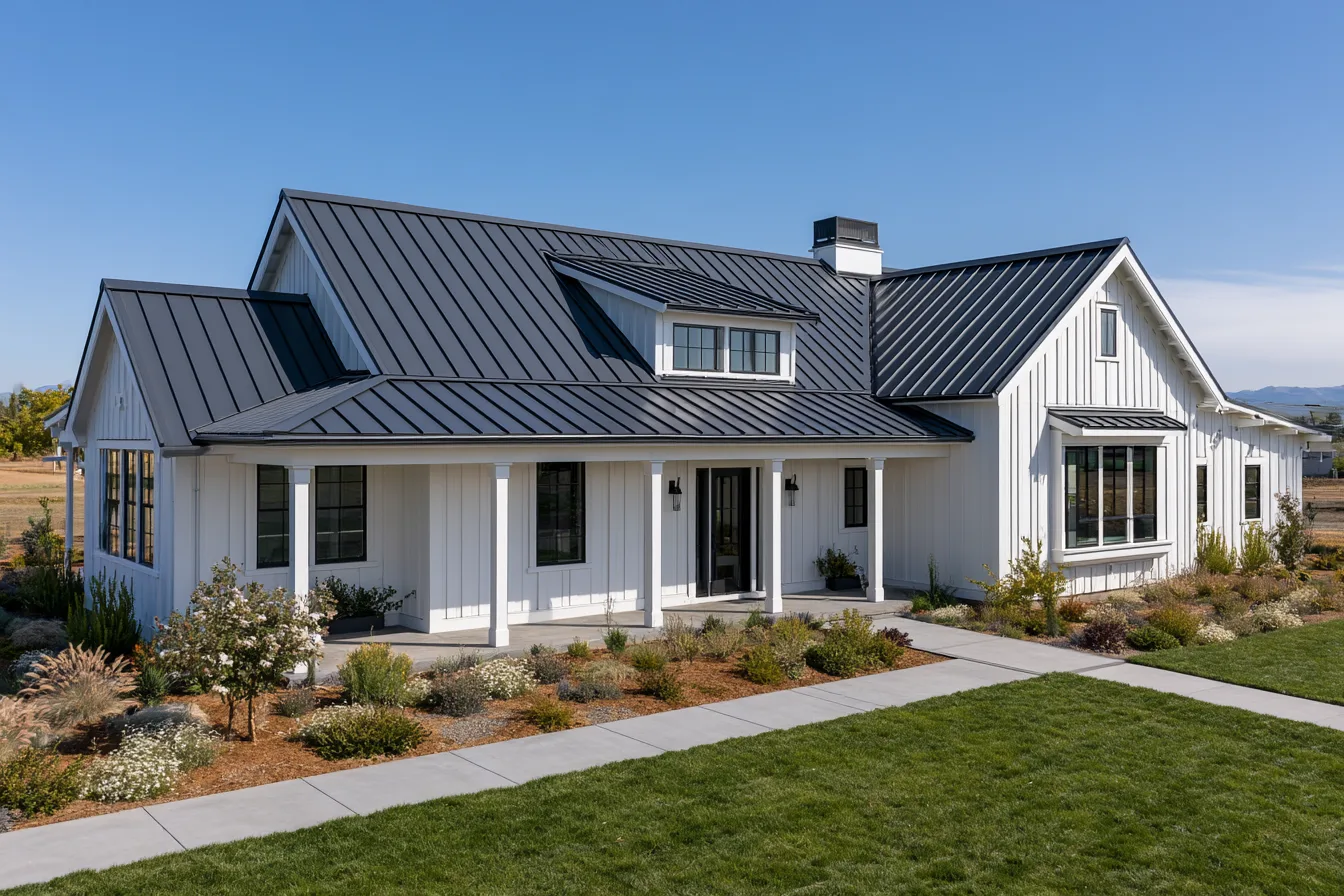
A white farmhouse style home with a charcoal standing seam metal roof under blue sky
Home/Metal Roofing

Metal roofing in Verdigris, OK

Compare a metal roof for your home or outbuilding by its panel system, the roof beneath it and the care its connections will need.

Let’s take a look at your roof.
Free roof inspections Repair and replacement choices

Request a free roof inspection

Tell us about the property and what you need.

A metal roof is a complete panel system

A metal roof is more than a sheet choice. Panels, fasteners, underlayment, edges and penetrations have to work together on the roof’s actual slope and supporting structure. The assembly for a conditioned home can differ from an open shop or outbuilding.

Start with how the building is used and what the existing roof can support. A change to metal may require a different fastening layout, ventilation or condensation control and new flashing details. A low-slope section needs a system specifically suited to that slope; the word metal does not settle suitability.

We can inspect the roof and explain those choices before you commit to a color or panel profile. If the concern is an existing metal-roof leak, the same review helps distinguish a repairable connection from wider panel or substrate failure.

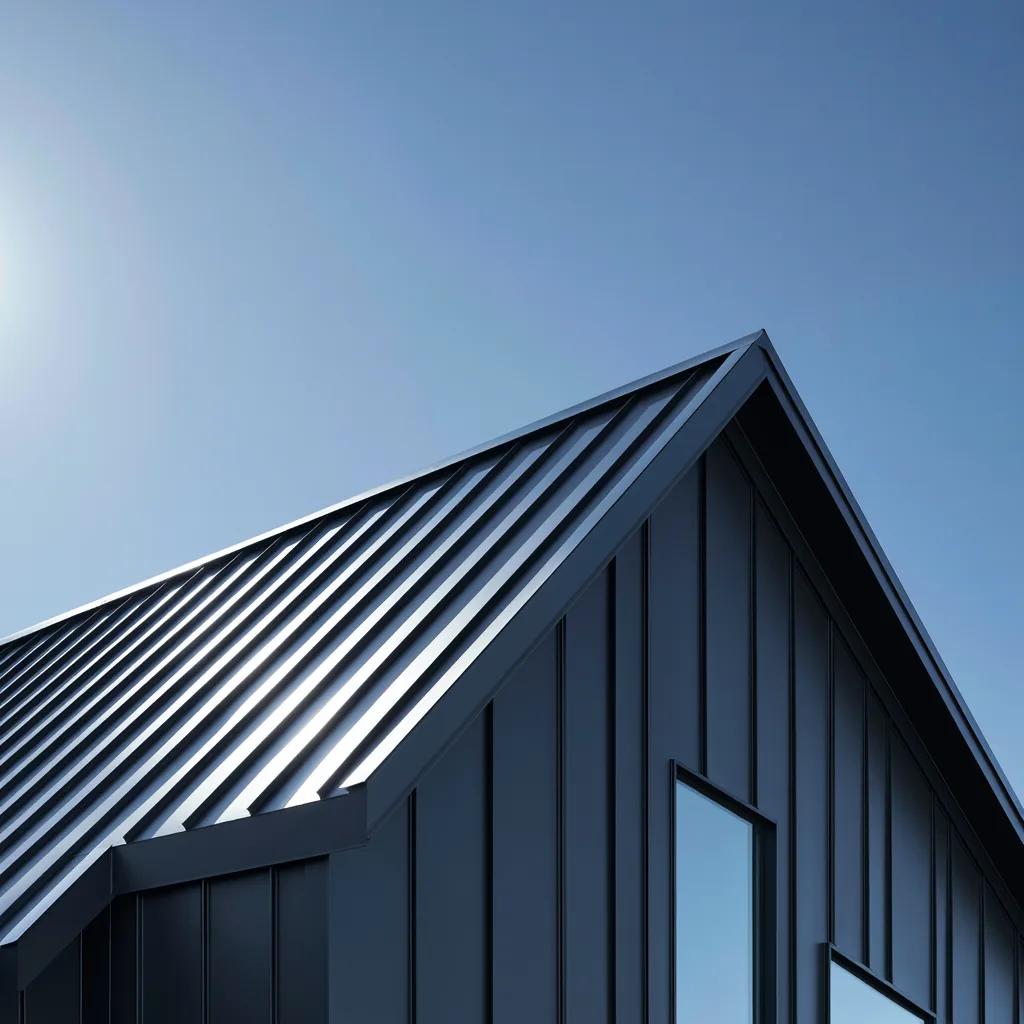
Black standing seam metal roof on a gable with matching siding

Standing seam and exposed-fastener roofing

Standing seam

Raised seams join the panels, with attachment generally concealed by the seam or panel system. Some assemblies use clips that allow controlled movement. The seam type, panel length and required details affect fabrication and installation cost. Concealed fastening reduces exposed fastening points, but does not make penetrations, edges or future maintenance disappear.

Exposed-fastener panels

Screws pass through the panel, with sealing washers protecting those openings. This can be an economical panel approach for suitable buildings. Fastener seating and attachment matter: a damaged washer or a fastener that loses its hold can become a leak point. Inspection and maintenance must account for those repeated connections across the roof.

Metal roof edges and openings need room to move

Metal expands and contracts as its temperature changes. Panel attachment and flashing must accommodate the movement allowed by the chosen system. Pinning a moving panel with the wrong repair or sealant detail can transfer stress to the next connection.

Long panel runs, end laps, wall connections and penetrations each need compatible details. Dissimilar materials can also create corrosion concerns where they contact one another. A generic boot or patch is not automatically appropriate for every panel shape.

That is why a small leak can call for more than tightening visible screws. The inspection needs to establish whether the opening comes from a worn washer, failed seam, moving joint, corrosion or an unsuitable original connection.
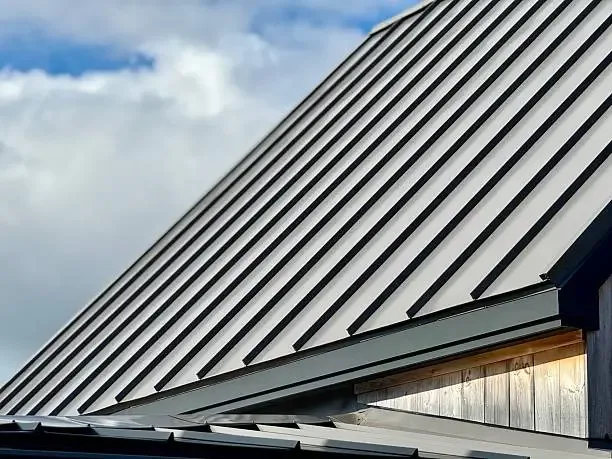
Standing seam metal roof slope above a wood soffit

Planning a metal roof replacement

1

Assess the base and existing layers

Check the deck or supporting members, the existing roof condition and the intended fastening. Removal exposes concealed damage; a recover needs a suitable assembly and compliance with the applicable requirements, not simply room for another layer.

2

Match the system to the building

Panel type, slope limits, underlayment, attachment and loads belong in one specification. A conditioned space also needs the roof and interior moisture control considered together so condensation is not mistaken for a rain leak.

3

Plan the transitions and installation

Eaves, ridges, valleys and roof openings need compatible flashings and movement details. Delivery and handling space matter for long panels, and safe weather conditions affect the installation sequence.

4

Set the care and coverage expectations

The finished roof still needs drainage paths and details kept in service. Material finish coverage and watertightness or workmanship coverage have different terms.

Metal roofing FAQs

Can metal go over shingles?

Sometimes an approved assembly can use an existing roof, but it is not the default answer for every property. Existing layers, deck condition, fastening, moisture control and local requirements must support it. Removal is useful where the underlying condition or surface cannot support the new system.

Is a metal roof hail-proof?

No. Hail can dent panels or damage their protective finish and connections. Cosmetic change and water-shedding damage are different questions; neither a metal label nor an impact rating establishes insurance coverage.

Can a leaking metal roof be repaired?

Yes, when the failed detail can be restored and the surrounding roof remains suitable. Worn fasteners, localized flashing problems and some seam defects may be repairable. Widespread corrosion, failed attachment or an unsuitable assembly can require broader work.

Discuss a metal roof for your property

Tell us whether you are planning a new metal roof or trying to solve a leak in the one you have. A free inspection can put the system choices in context.

  • Free roof inspections
  • A scope that fits the roof
  • Clear repair and replacement choices

Tell us about your roof

Tell us about the property and what you need.