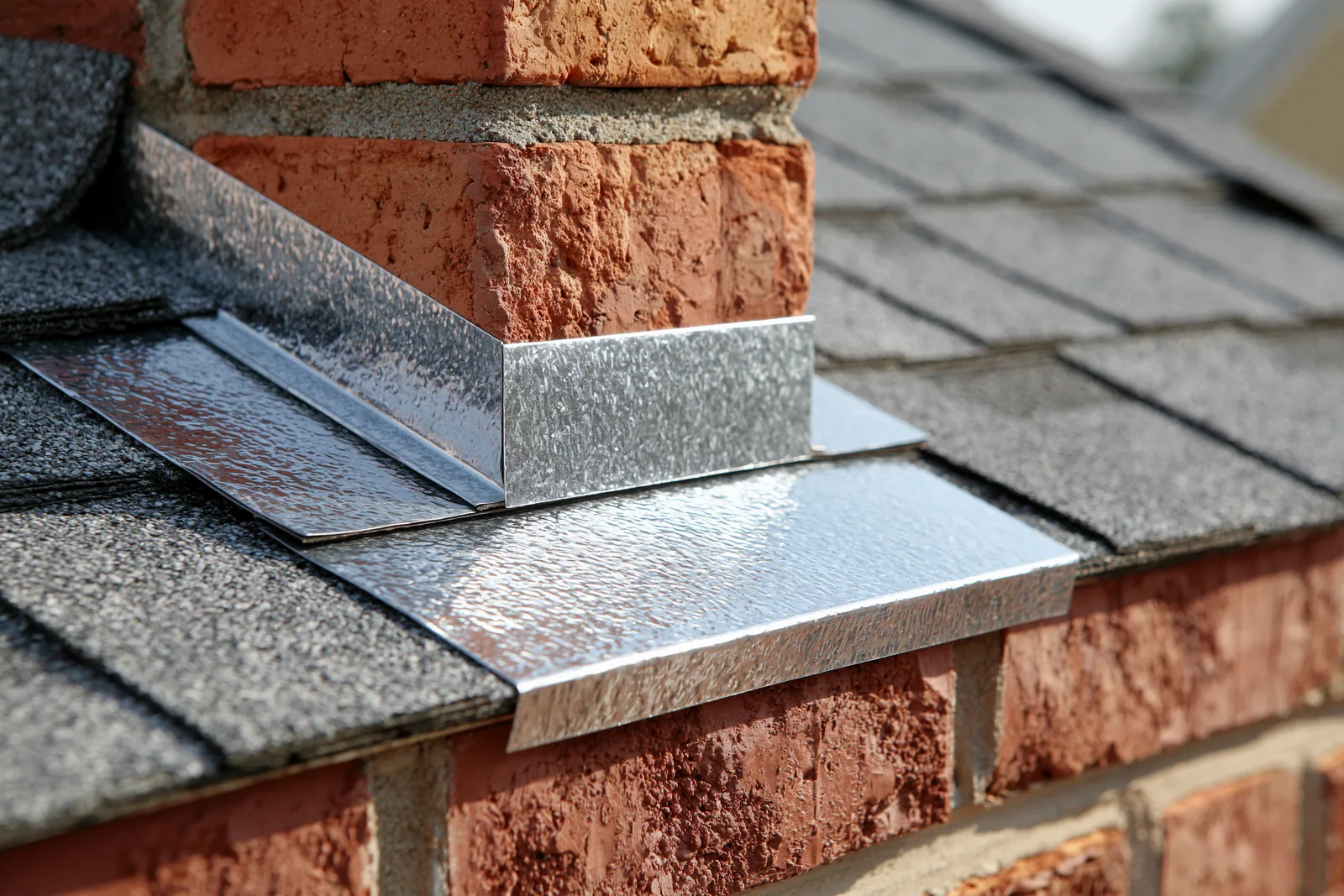
Metal saddle flashing wrapped around a brick chimney base on a shingle roof
Home/Flashing Repair

Roof flashing repair in Verdigris, OK

A leak beside a chimney, wall or roof vent may need the connection rebuilt. Get the joint and its surrounding roofing checked.

Let’s take a look at your roof.
Free roof inspections Repair and replacement choices

Request a free roof inspection

Tell us about the property and what you need.

Leaks where the roof meets a wall or chimney

Where a roof meets a vertical surface, shingles alone cannot complete the water path. Flashing bridges that change in direction and returns water to the outside. A gap at the joint, a poorly arranged overlap or a failed pipe boot can let water beneath otherwise sound roofing.

The indoor stain is a clue to follow, not a diagnosis. Water can arrive from the roof above the joint, from adjoining siding or masonry, or from the flashing itself. The inspection needs the connection and the neighboring materials in view.

A useful repair explains which part failed and how the renewed detail will overlap the roof and wall materials. Adding sealant across the visible edge may hide the opening without correcting the connection underneath.

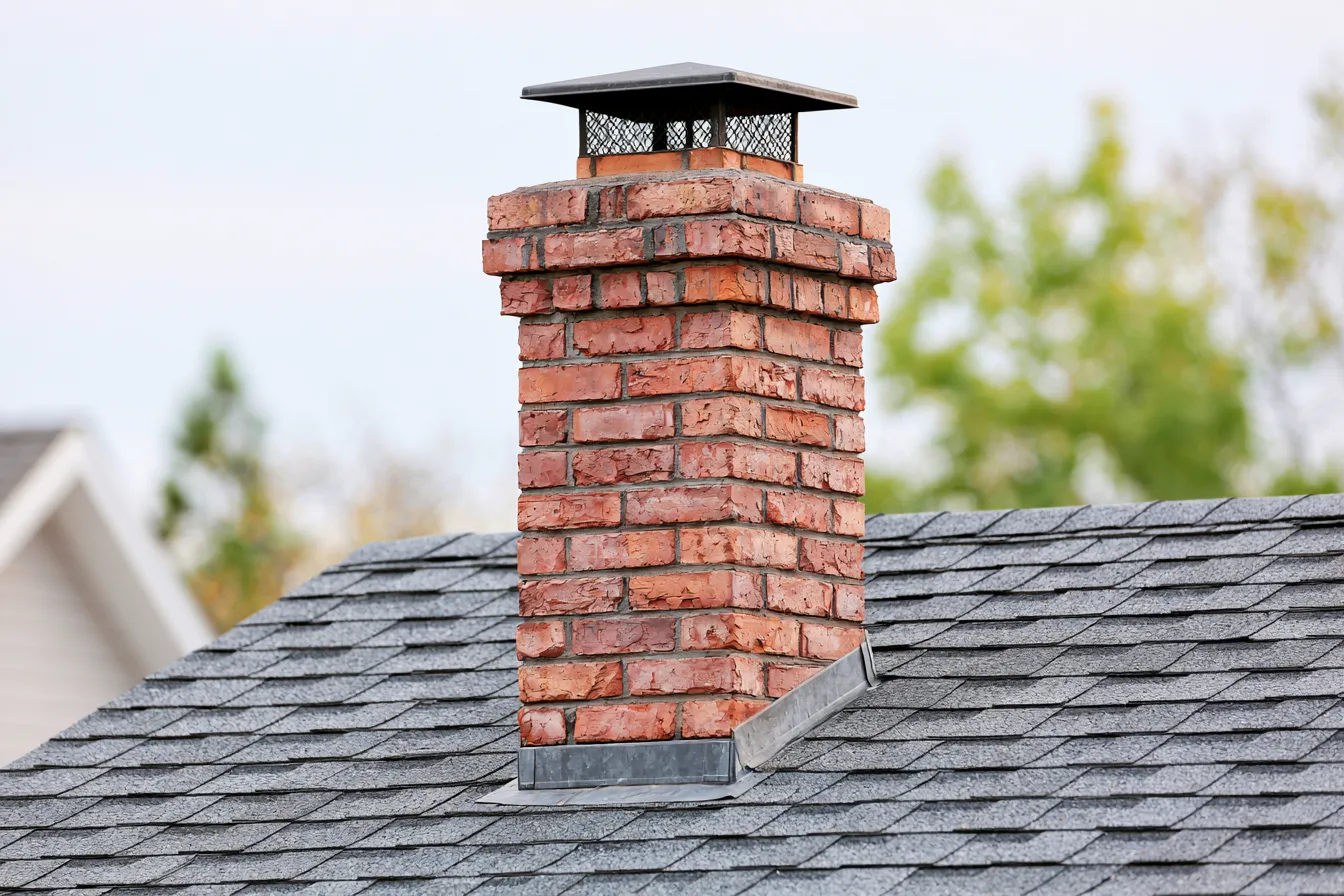
Brick chimney rising from a shingle roof plane

How flashing keeps the roof joints dry

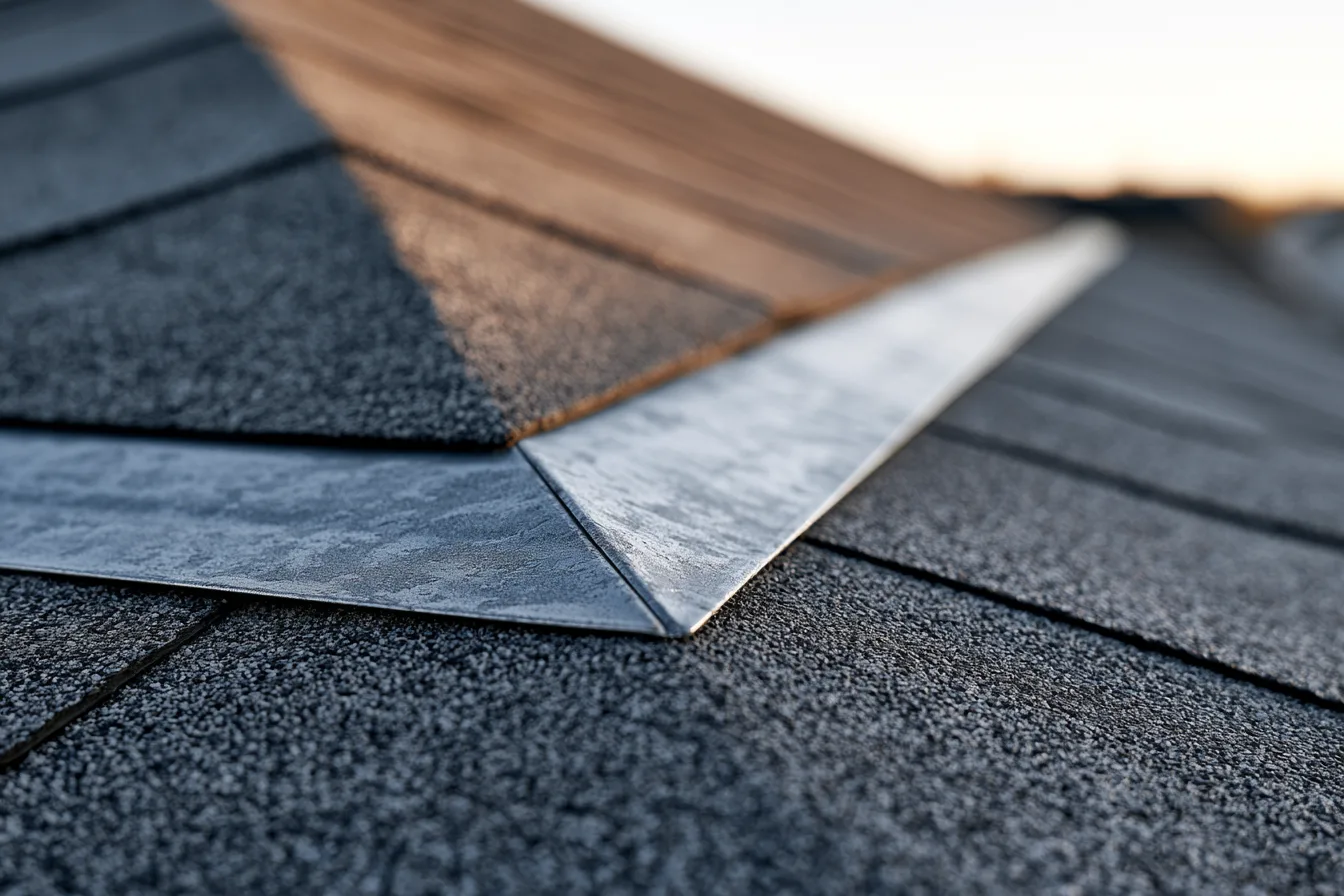
Galvanized flashing set into dark asphalt shingles at a roof transition

Sidewalls and step flashing

At a sloping roof-to-wall joint, individual flashing pieces work with successive shingle courses. The wall’s weather protection must overlap that detail so water does not run behind it. A kickout at the lower end, where appropriate, directs runoff away from the wall edge.

Replacing these pieces can require lifting shingles and opening part of the wall finish. The work is useful only if it restores both sides of the connection.

How repair boundaries are chosen
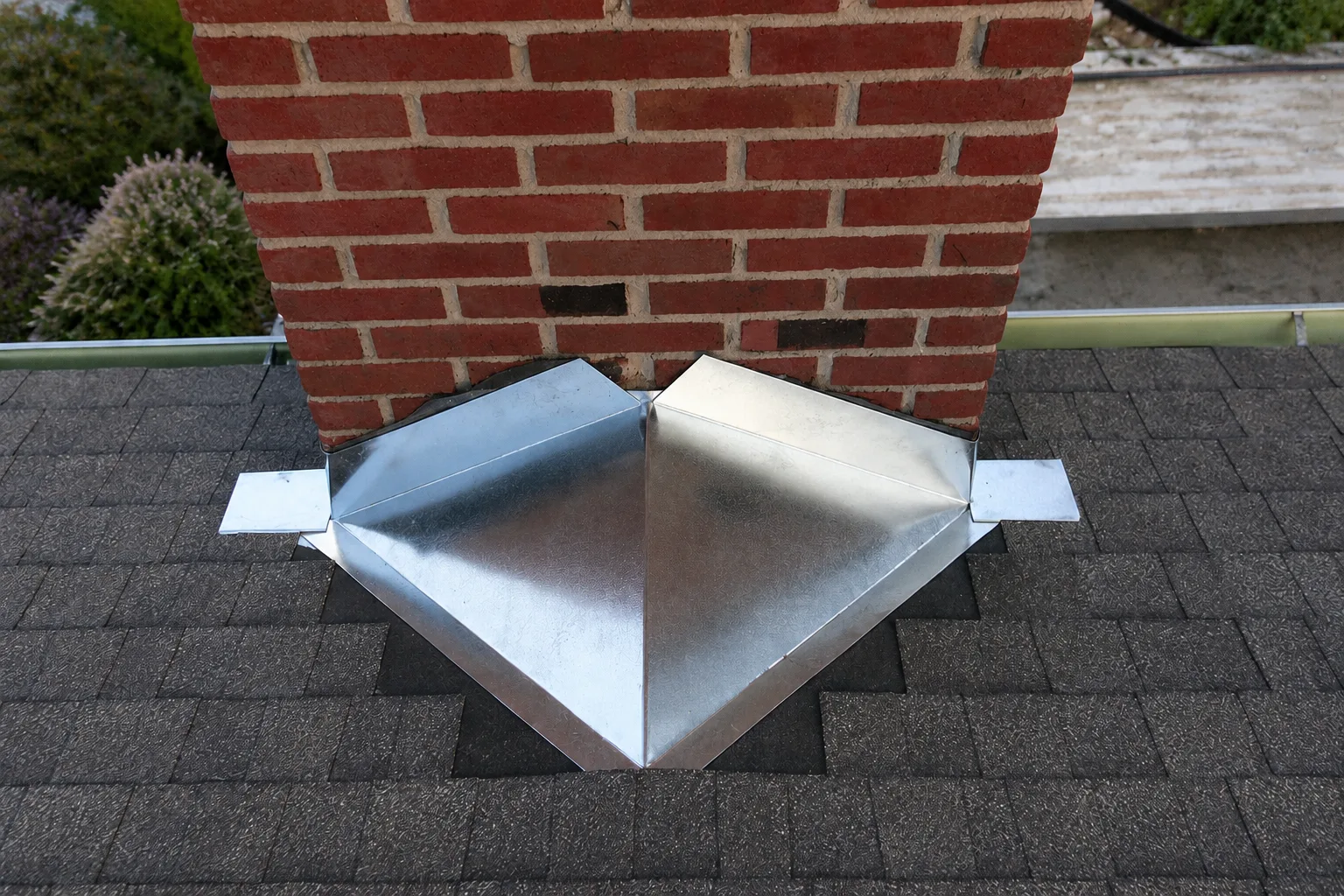
Peaked cricket saddle diverting water behind a chimney

Chimney bases and counterflashing

Base flashing joins the roof; counterflashing protects its upper edge at the chimney. The pieces need a watertight arrangement that accommodates movement. Sealant may be specified at a joint, but it is not a substitute for missing overlaps.

Water collecting behind a wide chimney may call for a properly designed cricket or other drainage detail. Deteriorated masonry or a damaged chimney crown is a separate repair responsibility that should be identified rather than labeled a flashing fix.

Request the connection to be checked
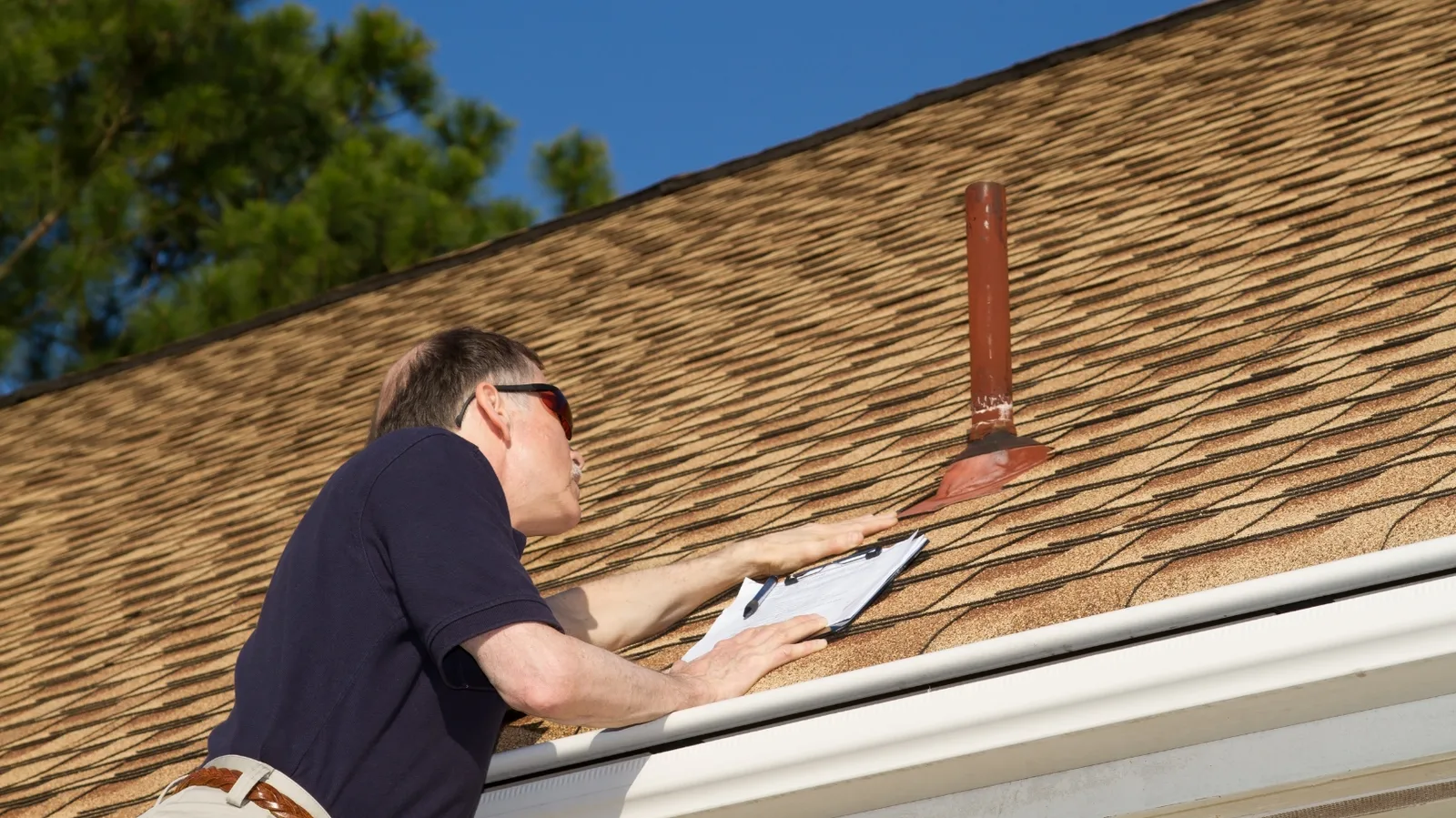
A roof inspection beside a vent pipe and its flashing base

Pipe boots and roof penetrations

A pipe boot has two jobs: seal around the penetration and lap into the covering. Cracked collars, loose bases and poorly sealed fasteners can each open a path. The repair must fit the pipe and the roof material.

The surrounding shingles usually need to be lifted far enough to replace and reconnect the base. Brittle material can enlarge that working area even when the failed collar looks small.

Understand local roof repairs

Local flashing work or a larger opening

A local joint can be rebuilt

When adjoining shingles remain workable and the wall connection is accessible, a limited opening can restore the detail. Compatible flashing and underlayment reconnect the repaired area without replacing sound roofing elsewhere.

Damage can extend beyond the flashing

Wet or deteriorated decking, brittle shingles and concealed wall damage can widen the work. Siding or masonry work may require a separate scope. The repair boundary should follow those conditions rather than a fixed patch size.

What the flashing repair scope includes

A flashing proposal should describe what will be opened and what will be put back. That includes the metal or boot, adjoining shingles, underlayment and the wall or chimney connection affected by removal.

Access, roof height, the number of intersections and damaged material beneath the opening change the cost. Reusing an existing piece is only reasonable when its condition, shape and connection suit the new work. A good-looking surface alone does not establish that fit.

Details that belong in the scope

  • Removal and reconnection

    Enough roofing is opened to restore the laps, not just cover the seam.

  • Hidden material condition

    Deteriorated deck or wall layers are identified and handled before closing the joint.

  • Related trades

    Masonry, siding and mechanical work are separated clearly from the roofing repair.

Flashing repair FAQs

Is caulk enough to fix chimney flashing?

Caulk can be one specified part of a flashing detail, but it cannot replace missing, badly lapped or moving metal connections. The base, counterflashing and surrounding roof need to shed water together.

Does wall siding have to come off?

Sometimes part of the wall finish needs to be opened so flashing can connect behind it. Surface-mounted metal that never reaches the wall’s weather protection can leave a concealed leak path. The actual wall assembly determines the work.

Can flashing be reused during replacement?

Only if the piece is sound, compatible and able to connect correctly to the new roof. Bent metal, old fastener holes, damaged coatings or a poor original detail can make replacement more useful. The choice belongs in the inspected scope.

Get the roof joint checked

If a leak keeps returning at a roof joint, ask for a free inspection. We can look beyond the surface patch and explain what the connection needs.

  • Free roof inspections
  • A scope that fits the roof
  • Clear repair and replacement choices

Tell us about your roof

Tell us about the property and what you need.