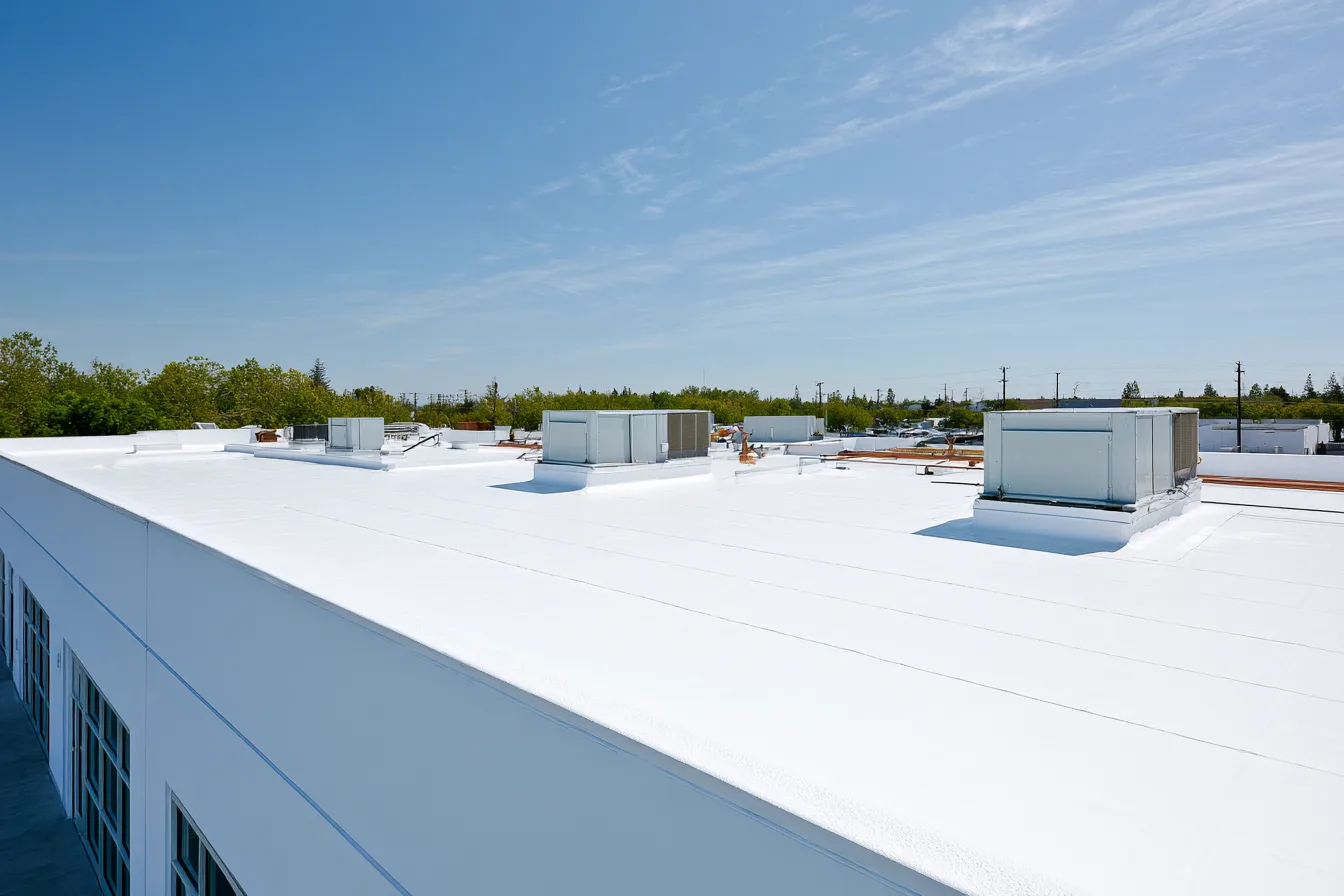
Bright white flat roof with rooftop equipment and visible seam lines
Home/TPO Roofing

TPO roofing in Verdigris, OK

Plan a TPO roof around the deck, insulation, drainage and roof openings, with the occupied building below kept in the work plan.

Let’s take a look at your roof.
Free roof inspections Repair and replacement choices

Request a free roof inspection

Tell us about the property and what you need.

TPO roofing starts with the assembly

TPO is a single-ply membrane whose field seams are joined with heat. It forms the weather surface of a larger roof assembly. The deck, insulation, attachment and perimeter details determine how that surface is supported and secured.

A white membrane does not identify the whole system or establish that it is suitable for a particular building. An adhered assembly, a mechanically fastened assembly and an induction-welded assembly connect to the base differently. The correct choice needs the deck, building conditions and project requirements in view.

A free commercial roof inspection starts with the present roof and your concern. For an existing leak, the useful answer may be a defined repair. For a replacement, the proposal needs to explain the assembly beneath the new membrane as well as the finished surface.

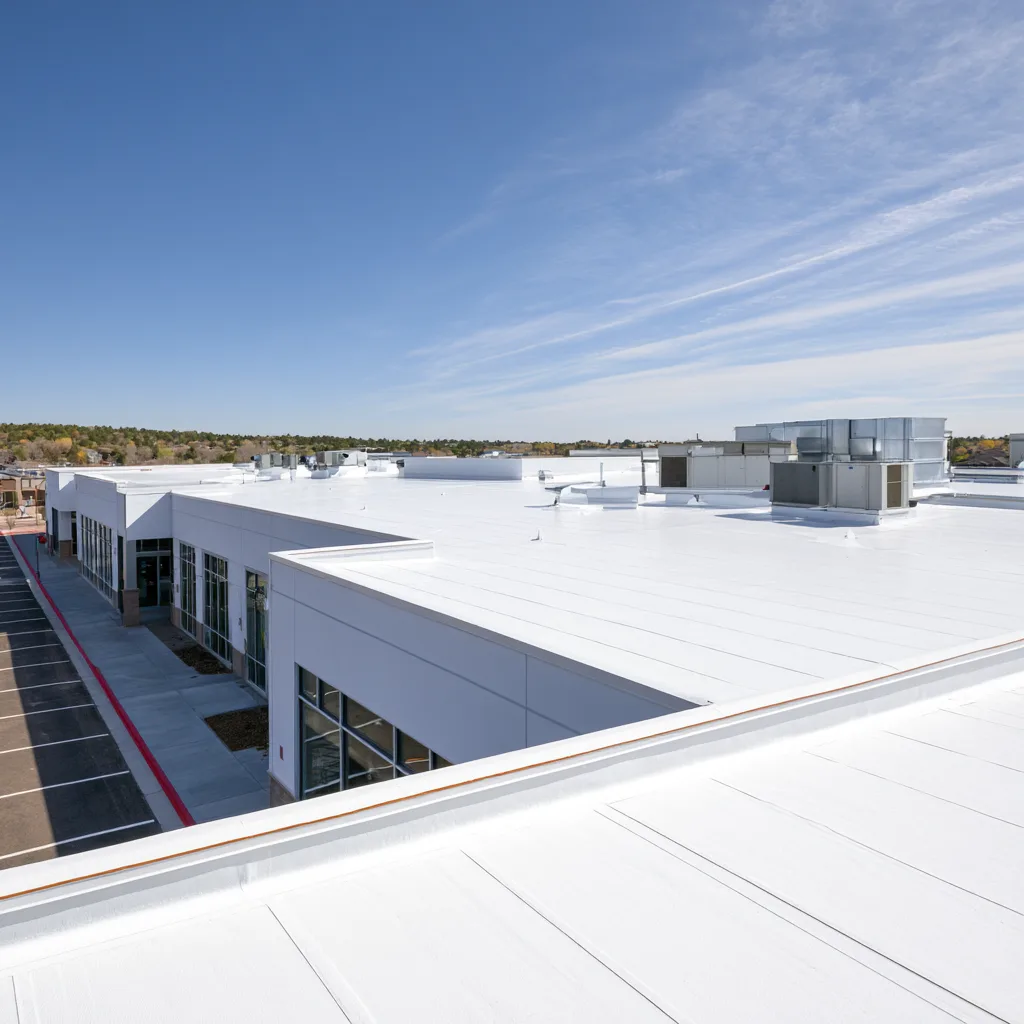
White flat roofing across a retail center beside a parking lot

TPO seams and penetrations need continuous protection

The membrane has to continue around curbs, pipes, drains and perimeter edges without leaving a route below the surface. Field seams need a compatible, properly prepared welding area. Corners and changes in direction need their own details rather than a bead of general-purpose sealant.

Rooftop equipment complicates the work. A curb or service line may restrict access to a seam, while later equipment work can puncture or strain roofing nearby. The scope should identify how each connection will be reached, flashed and protected after installation.

At roof edges, secure termination matters as much as the seam in the middle. A roof that looks intact across its open field can still admit water where its perimeter or curb connection has failed.
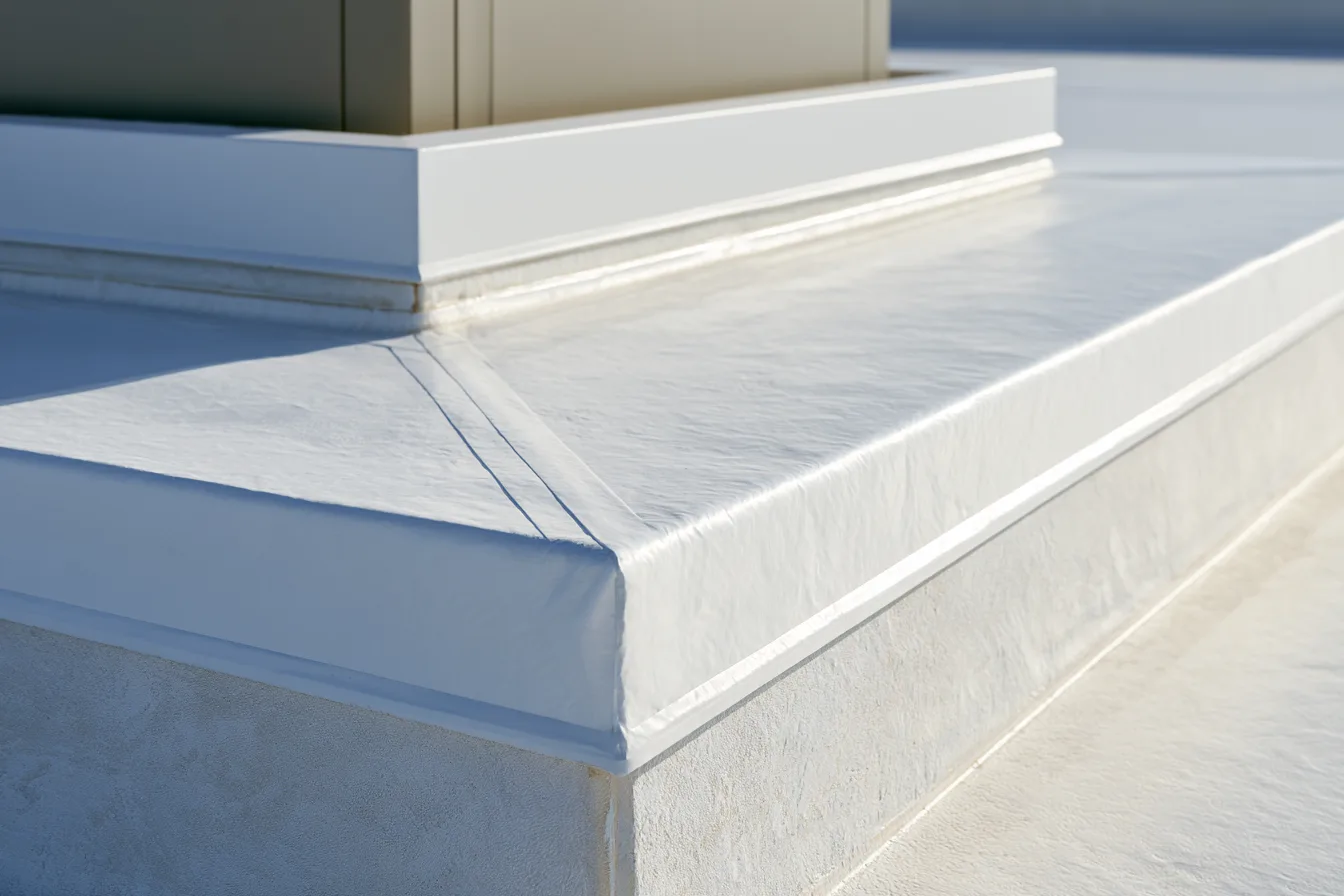
Close-up of a wrapped membrane corner at a rooftop equipment curb

Repairing a TPO roof or replacing the membrane

Repair a defined opening

A puncture or failed detail can be repaired when the surrounding membrane accepts a reliable compatible connection and the underlying layers remain suitable. Older membrane may need preparation and a trial of the proposed repair method. Age alone neither rules out a patch nor proves that one will hold.

Renew a failing assembly

Wet insulation, widespread deterioration or inadequate attachment can make scattered patches poor value. The repair boundary has to reach sound, dry material. Where that condition cannot be reached locally, replacement of a larger area or the roof assembly deserves consideration.

Explore commercial roof replacement

Planning a TPO installation

1

Establish the existing assembly

Identify the membrane and supporting layers, known leaks and access conditions. Further moisture or substrate investigation may be needed before choosing a repair, recover or tear-off; the surface does not reveal every concealed condition.

2

Resolve drainage and attachment

The new assembly must account for how water reaches outlets and how the roof resists movement. Deck condition, insulation layout and any required slope changes influence the specification. A new membrane cannot correct a low spot beneath it by itself.

3

Plan around equipment and occupancy

Coordinate access to units, service lines and curbs. Deliveries, staging, noise and work above sensitive rooms belong in the plan, with arrangements for keeping opened areas protected as conditions change.

4

Install and check the connections

Prepare the base, secure the insulation and membrane as specified, and complete seams, flashings and edges. Finished details should be checked before equipment traffic resumes. The closeout should identify care needs and actual coverage.

TPO cost, care and warranty scope

Membrane thickness is only one part of a TPO proposal. Insulation, cover board, attachment, edge metal and the number of penetrations can materially change the work and its cost. A thicker sheet does not resolve wet layers or improve a poorly executed joint.

Manufacturer and workmanship coverage depend on the actual system, installer eligibility and written terms. After installation, clear drainage paths and controlled roof traffic help protect the assembly; equipment changes should be coordinated with its roofing details.

Compare the whole proposal

  • Below the sheet

    Deck repairs, dry insulation and required thermal or drainage changes.

  • At the connections

    Seam preparation, curbs, perimeter termination and compatible accessories.

  • After installation

    The coverage issuer, exclusions, maintenance and access arrangements.

TPO Roofing FAQs

Can an older TPO roof still be patched?

Often, if the surrounding membrane can accept a reliable compatible patch and the affected layers can be restored. The roof’s surface condition and the extent of concealed moisture matter more than a simple age cutoff.

Does a thicker membrane settle the warranty choice?

No. Coverage depends on the complete qualifying assembly, installation requirements, issuer and written terms. Thickness is a material choice, not a promise that every leak or outside cause is covered.

Can TPO be installed over the existing roof?

A recover requires suitable dry existing layers, secure attachment, adequate support and compliance with the applicable assembly and local requirements. Wet or deteriorated layers cannot be made sound by covering them. An inspection helps determine whether removal is necessary.

Arrange a free commercial roof inspection

Tell us about the building, known leaks and how the roof is accessed. A free inspection can help define a TPO repair or replacement scope.

  • Free roof inspections
  • A scope that fits the roof
  • Clear repair and replacement choices

Tell us about your roof

Tell us about the property and what you need.