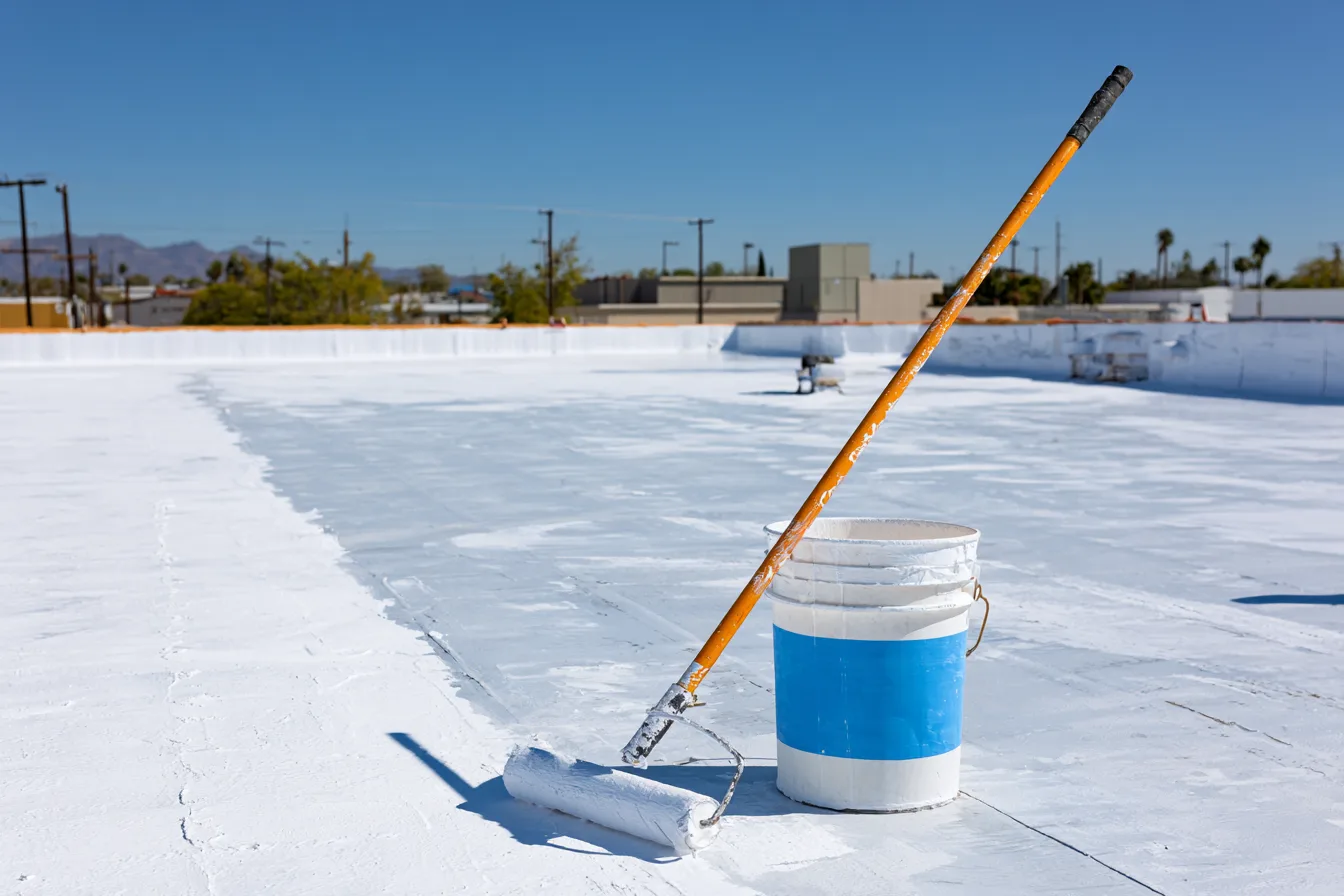
Roof coating roller and bucket resting on a white coated rooftop
Home/Roof Coatings

Roof coatings in Verdigris, OK

A coating can be useful on a suitable prepared roof. Begin with the condition below the surface and the repairs needed before restoration.

Let’s take a look at your roof.
Free roof inspections Repair and replacement choices

Request a free roof inspection

Tell us about the property and what you need.

A roof coating needs a roof worth restoring

A roof coating adds a specified protective layer to an existing roof. It depends on that roof for support, attachment and drainage. Restoration works best as a deliberate system choice after the assembly has been assessed, not as a way to conceal a roof that is already failing underneath.

The first questions are whether the roof is dry enough to retain, whether its materials are compatible with the proposed coating and whether the base remains secure. A roof can look serviceable from above while wet insulation or poor attachment makes restoration unsuitable.

An inspection helps separate necessary repairs from the coating application itself. The useful proposal explains the preparation, detail work and selected coating system, including what the work will not correct below it.

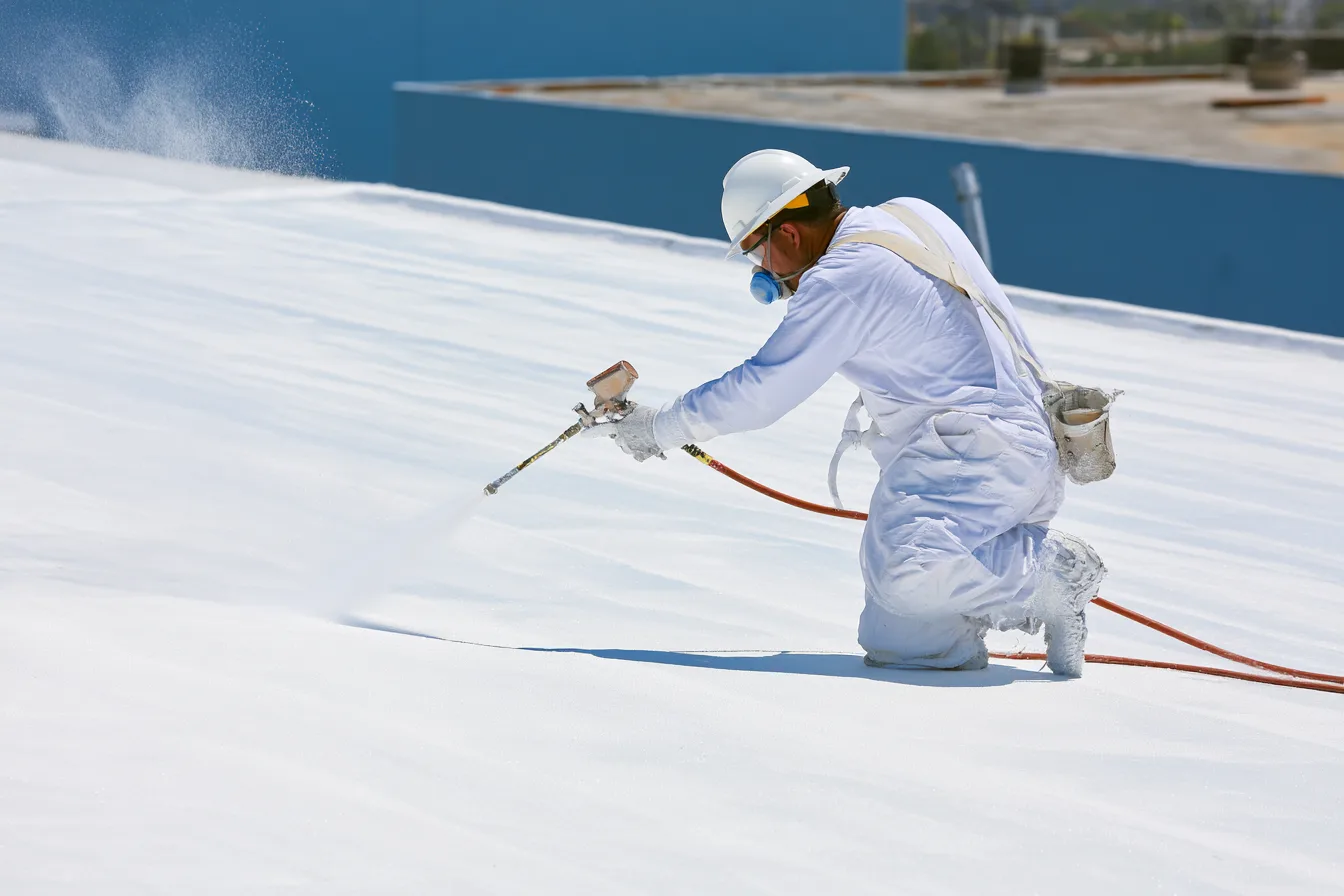
Worker in protective gear spray coating a white commercial roof

Which conditions support roof restoration?

A sound base supports restoration

An existing roof with serviceable dry layers and secure attachment may be a candidate after local defects are repaired. Compatibility and adhesion must suit the substrate. Previous coatings and repairs are part of that assessment, because the new layer bonds to the surface actually present.

Wet or unstable layers need other work

A coating does not remove moisture from insulation, repair a deteriorated deck or reattach a loose assembly. Widespread damage can require removal rather than restoration. Ponding caused by an underlying low area also needs a drainage solution; changing the surface alone leaves the geometry in place.

Preparation makes the coating system work

Preparation determines what the coating can bond to. The surface needs the cleaning and preparation specified for that substrate and product. Where an adhesion test or primer is required, it is part of the system rather than an optional finishing step.

Seams, penetrations and damaged areas need suitable repairs and reinforcement before the field coating is applied. Application thickness and cure conditions must meet the chosen specification; a thin coat that changes the color is not the same as a complete restoration system.

The work should also protect drains, equipment and adjacent surfaces. Application equipment, overspray risk where relevant and access around rooftop units all affect how the job is organized.
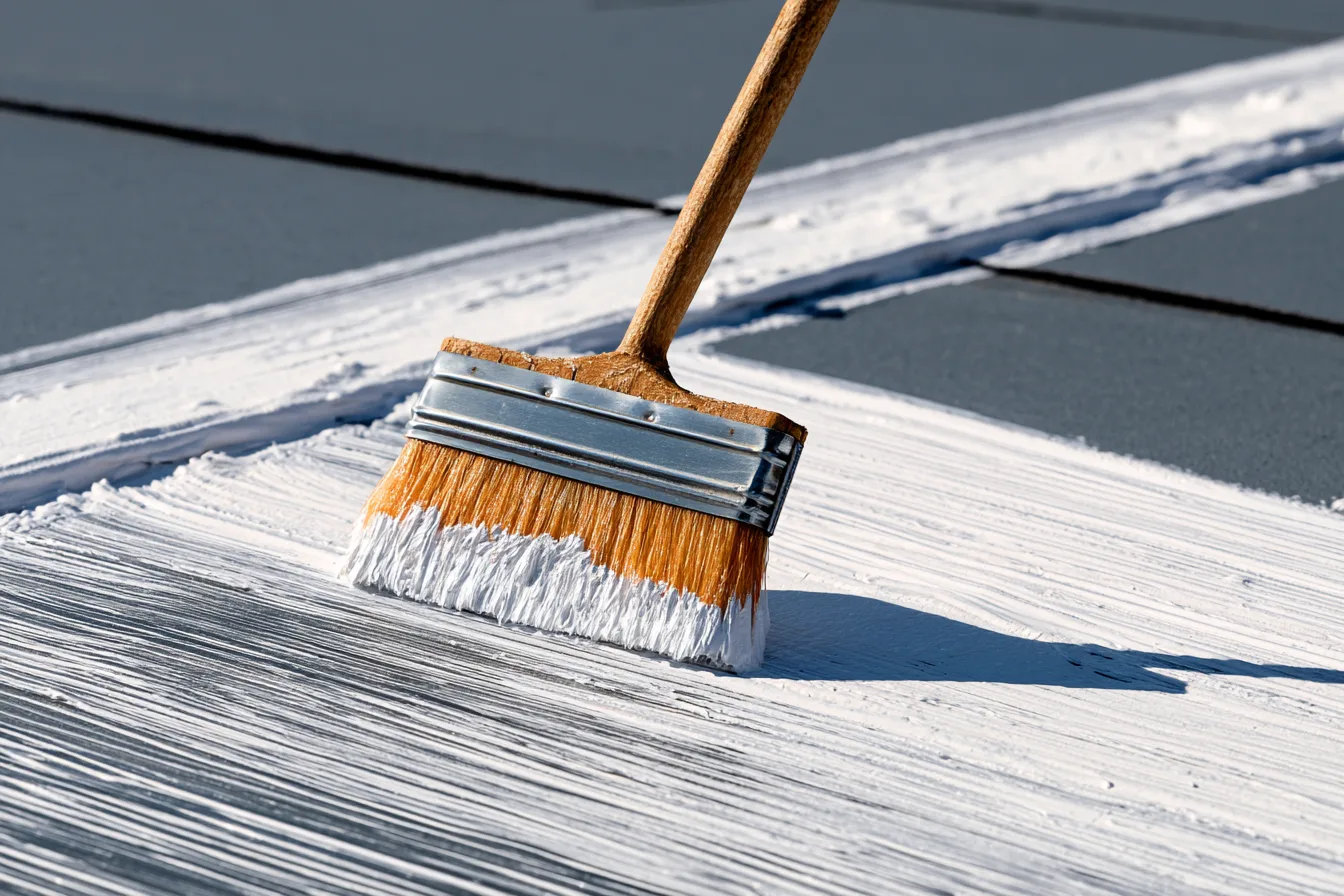
Close-up of a paintbrush applying white coating to a granulated roof

How commercial roof coating work is planned

1

Determine what can stay

Assess the roof material, moisture concerns, attachment, drainage and previous repairs. Define any investigation needed to settle concealed conditions before relying on restoration.

2

Complete the prerequisite repairs

Remove or repair unsuitable local areas and restore details with compatible materials. The scope should identify the repair extent instead of assuming coating will cover every defect.

3

Choose a workable application window

Product-specific temperature, moisture and cure requirements govern the application. Building access and sensitive operations below or beside the roof also belong in the schedule.

4

Plan the roof’s continued care

Keep drainage clear and control traffic after the work. Future repair methods and any recoating needs depend on the selected system and condition. A coating is not a permanent exemption from roof maintenance.

What changes a roof coating budget

Roof area is only one part of a coating budget. A heavily detailed roof can need substantial preparation at seams, curbs and penetrations before the open field is ready. Removing unsound repairs or incompatible coating can also change the work.

The selected system specifies products, reinforcement, application and coverage requirements. Those requirements, together with access and cure conditions, make a generic price per square foot a poor substitute for an inspected scope. The proposal should distinguish the preparation and repair work from the coating application so the restoration choice can be judged on its merits.

Three cost drivers to keep visible

  • Existing condition

    Wet or failing areas and old repairs determine the preparation boundary.

  • Roof details

    Seams, drainage outlets, curbs and edges need separate treatment.

  • The specified system

    Compatibility, primer, reinforcement and application requirements determine what is actually installed.

Roof Coatings FAQs

Can a coating go over wet insulation?

No. Wet insulation needs to be addressed, including removal where necessary. Coating the top does not dry the assembly or restore the insulation’s condition.

Will a coating fix standing water?

It does not change the roof’s slope or eliminate a low spot. A blocked outlet and an underlying drainage problem require different corrections. Product tolerance for ponding must also be considered in the selected system.

How is the roof prepared for a coating?

The existing material and chosen product determine the process. It normally includes cleaning, repairing defects and treating seams and penetrations, with adhesion testing, primer and reinforcement where specified. Application and cure requirements must then be met.

Arrange a free commercial roof inspection

A free commercial roof inspection can help establish whether the roof is worth restoring and what preparation a coating would require.

  • Free roof inspections
  • A scope that fits the roof
  • Clear repair and replacement choices

Tell us about your roof

Tell us about the property and what you need.