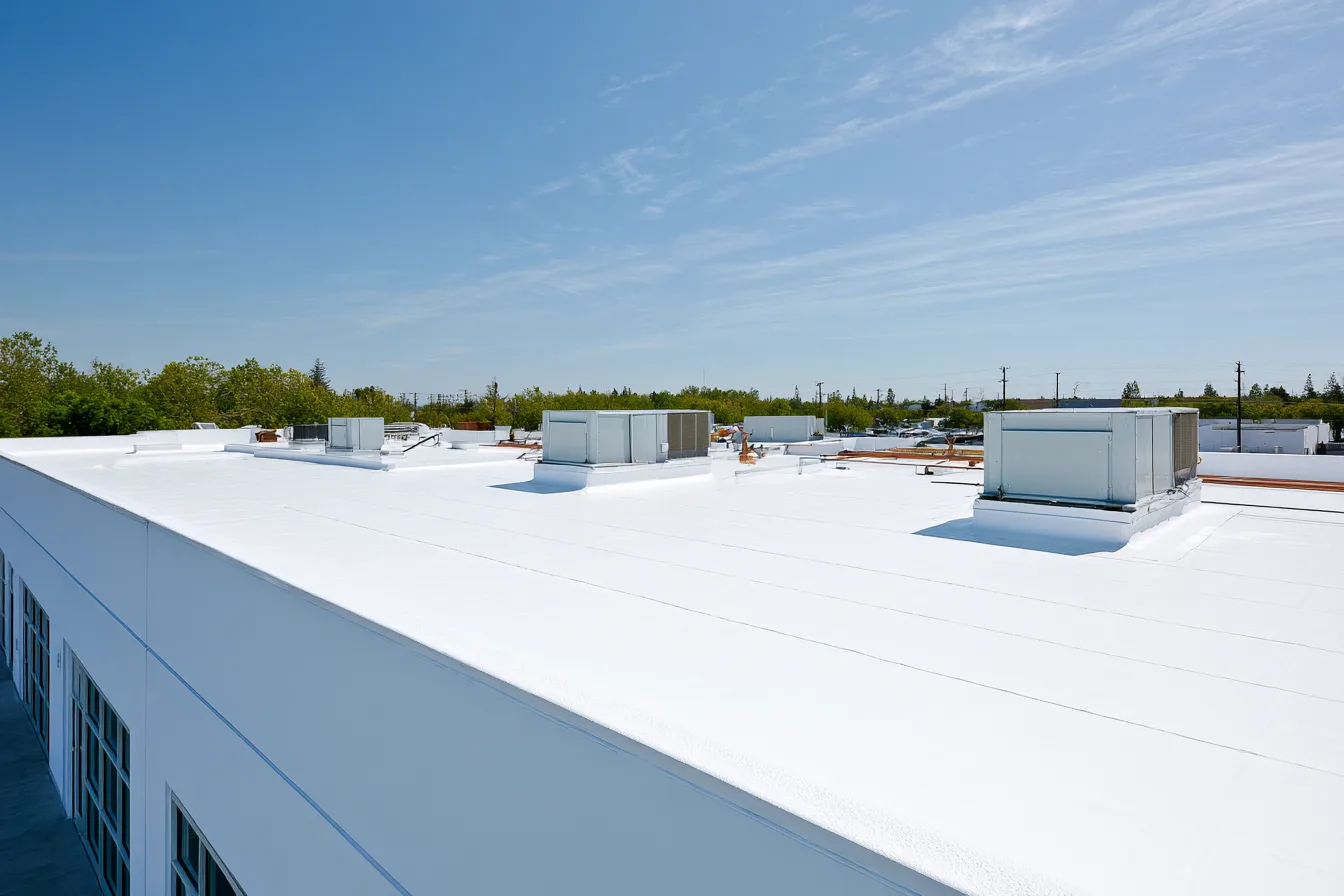
TPO roofing
Heat-welded membrane systems and the insulation, edges and details beneath them.
Explore TPO roofing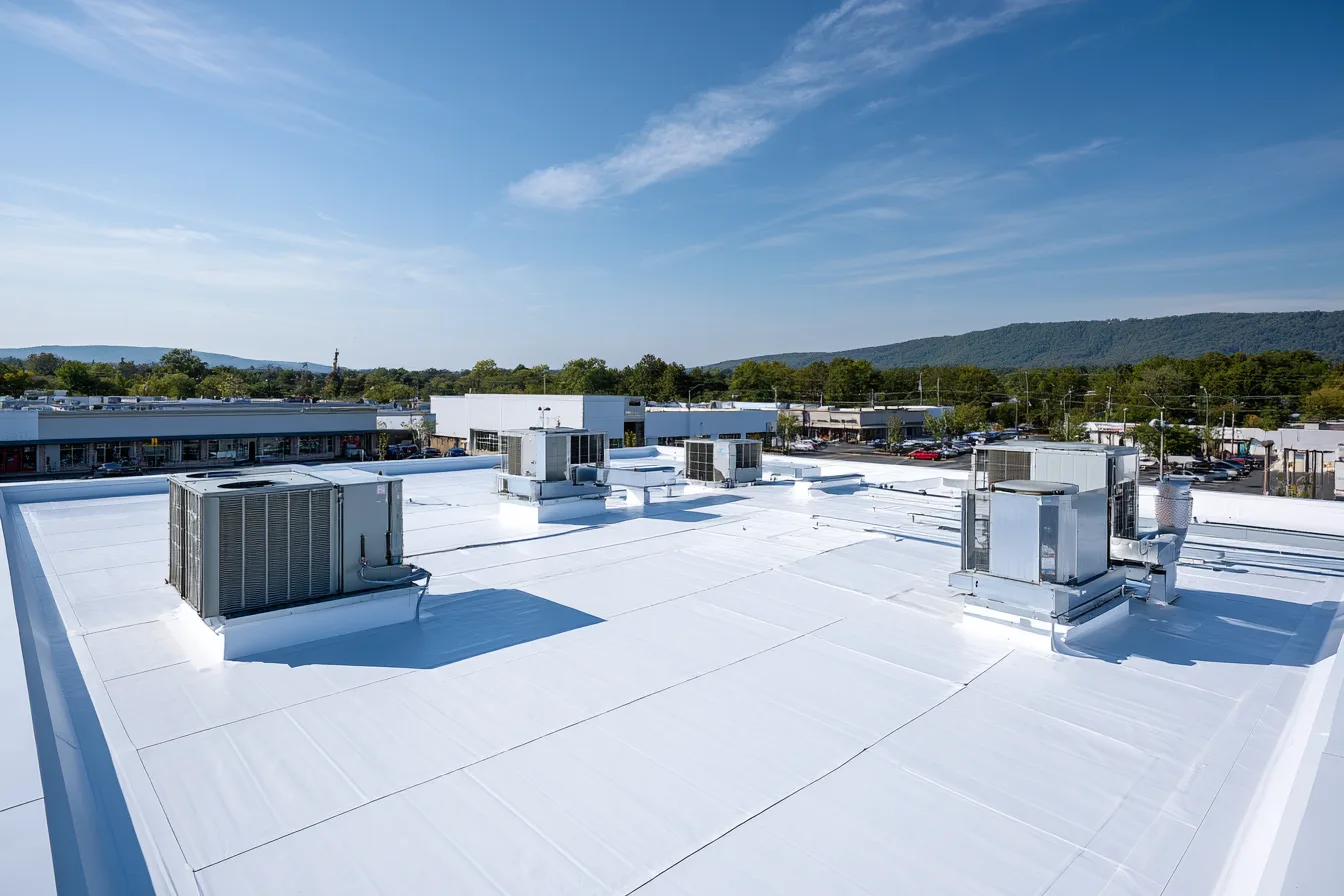
A leak over a work area needs a roofing plan that accounts for the business below it. Explore repair, coatings and replacement for your Verdigris property.
The ceiling leak is only one part of a commercial roof problem. The building’s roof may carry air-conditioning equipment, service paths, drains and walls that interrupt the membrane. Water needs a clear route off the surface, and every opening needs a dependable connection.
We start with the concern, the roof system and how the building is used. That includes the condition of seams and flashings and whether moisture has reached insulation beneath the covering. A free roof inspection helps establish the next useful step, including further assessment where the hidden layers need examination.
Tell us which rooms or operations are affected and how roof access is arranged. Those details let the roofing scope account for the people and work inside.
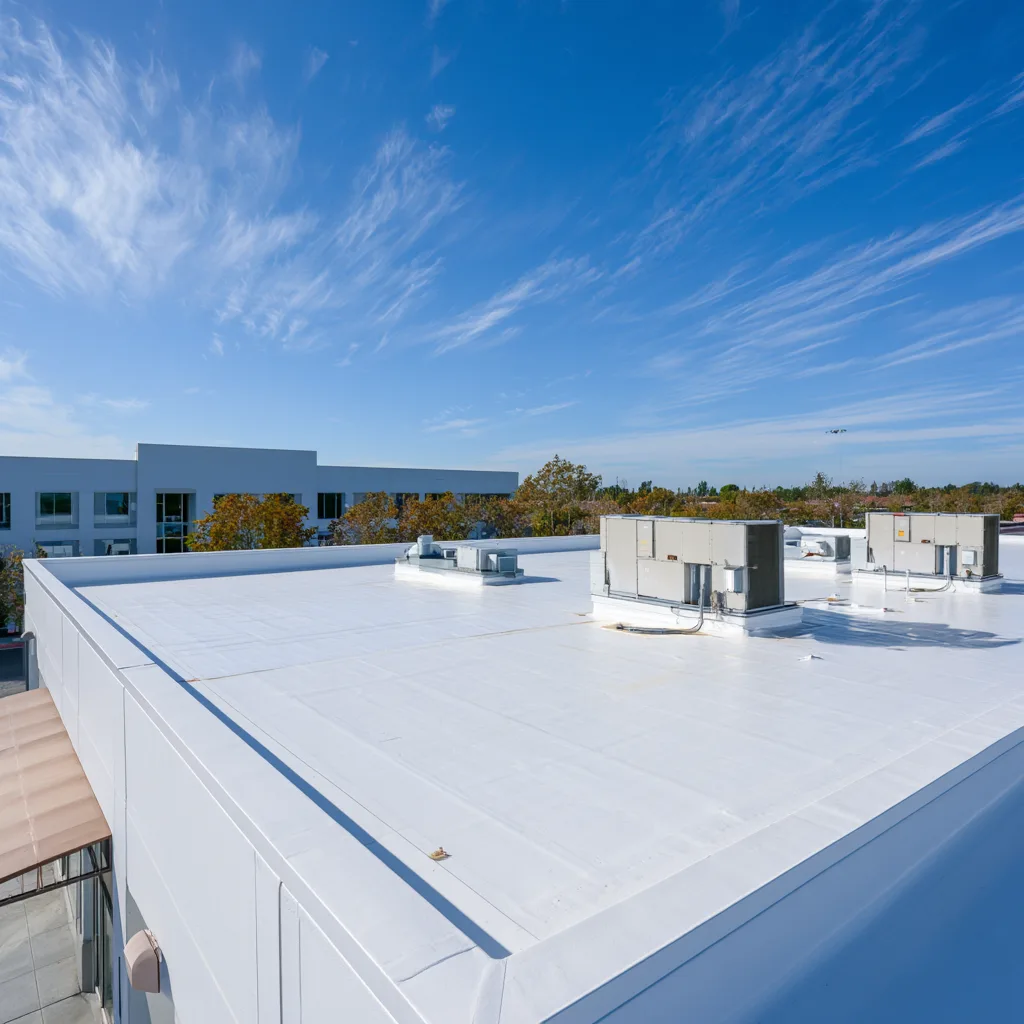
Use the system pages for the physical work and limits of each option. The condition of the existing assembly comes before a material recommendation.
Heat-welded membrane systems and the insulation, edges and details beneath them.
Explore TPO roofing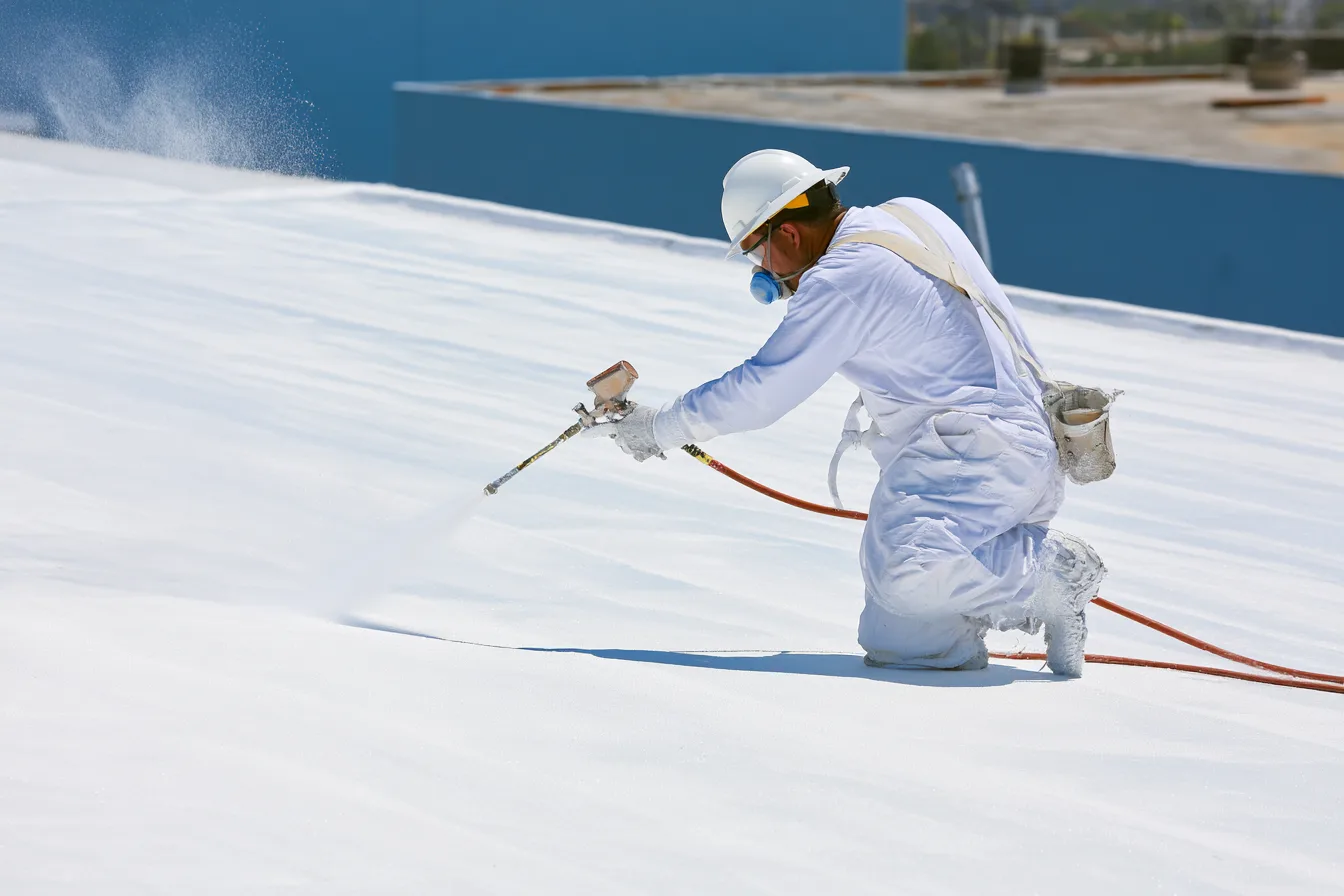
Restoration for suitable dry, secure roofing after the necessary preparation and repairs.
Explore roof coatings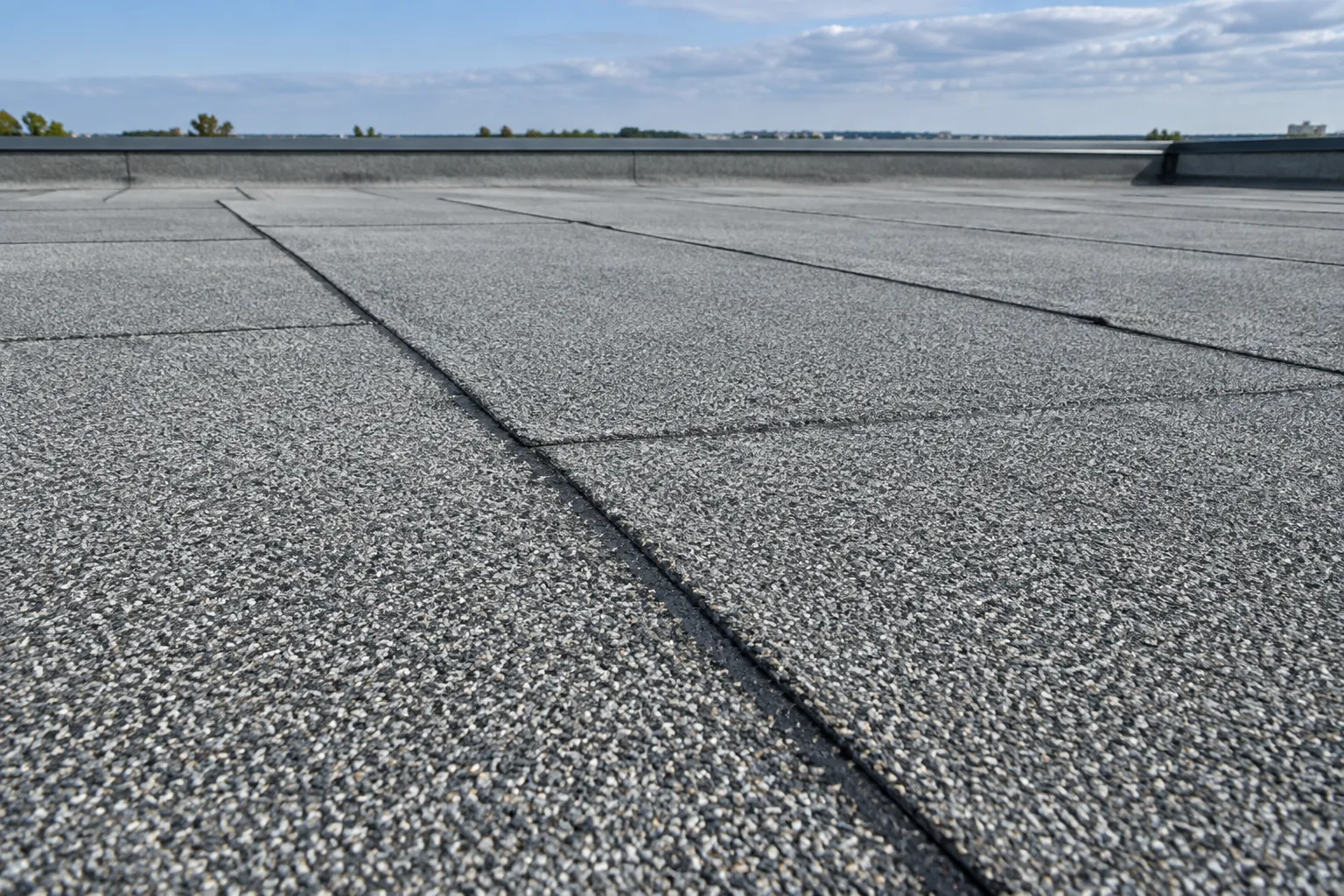
Trace entry at seams, curbs, drains and openings, then restore compatible roof details.
Explore flat-roof repair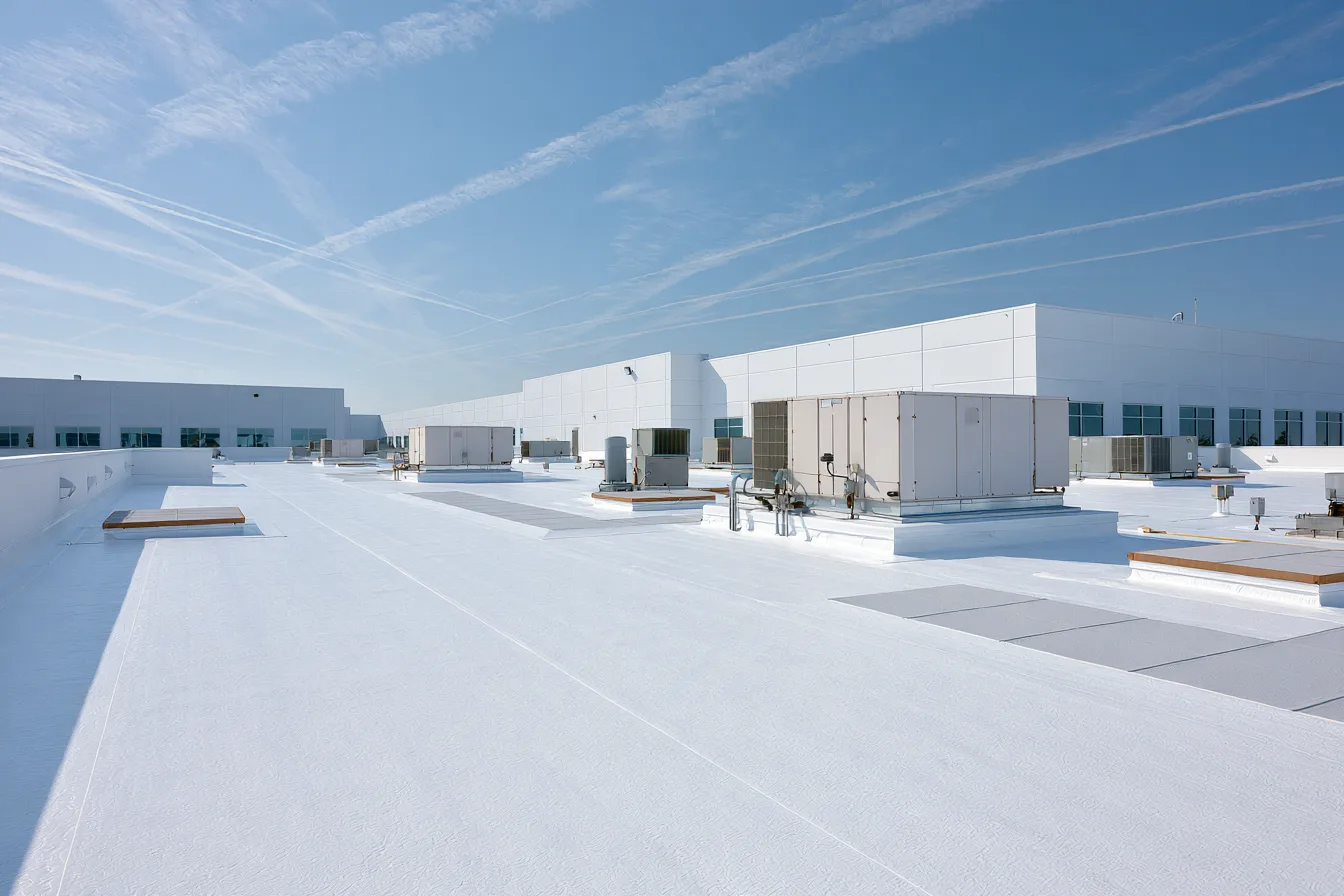
Renew failed roofing and address the deck, insulation and drainage in the scope.
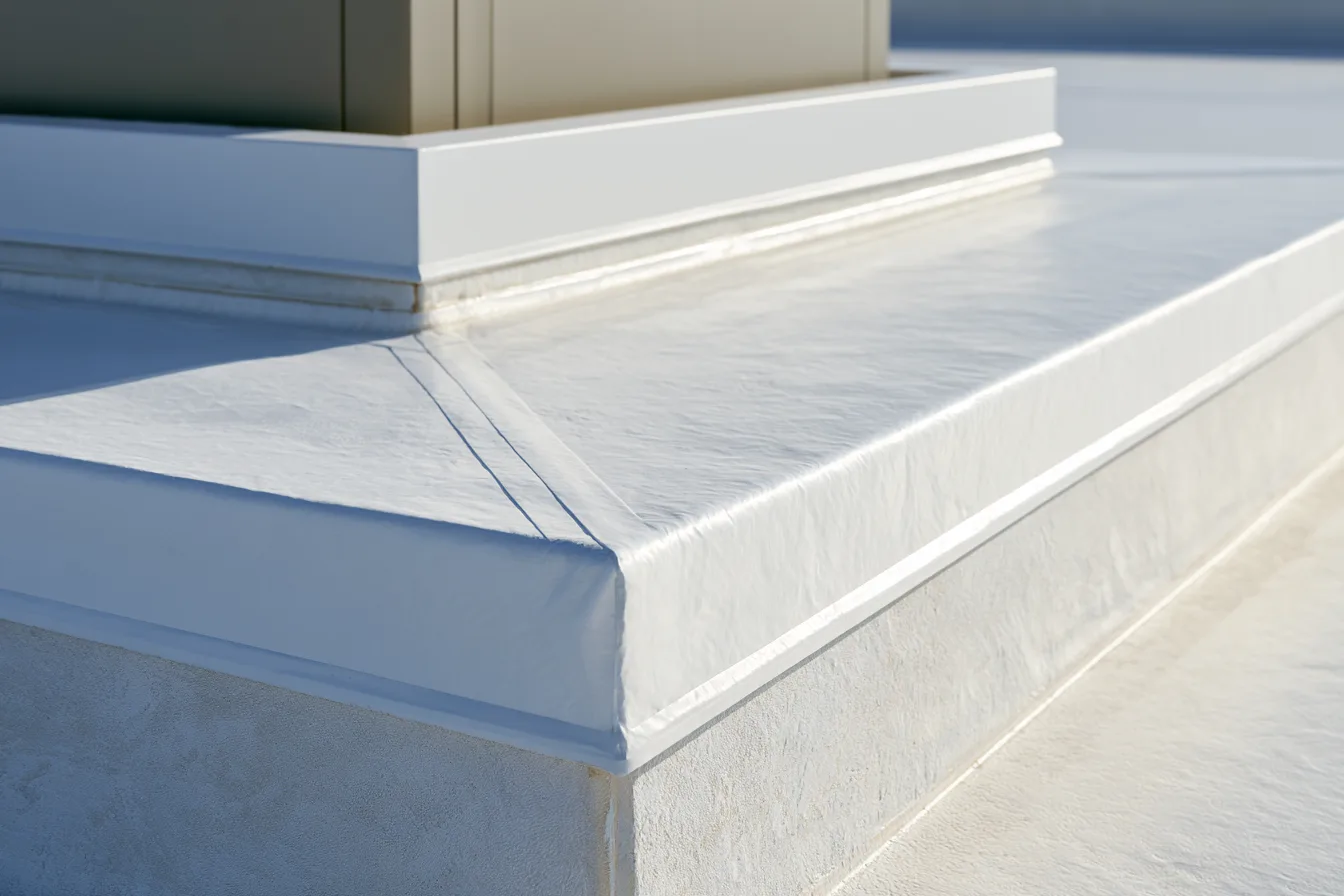
Explore commercial replacementA rooftop unit sits on a raised curb with flashing joining it to the roof. Nearby seams, drain details and wall connections interrupt an otherwise continuous membrane. A leak beside that equipment needs those roof details checked, while the equipment itself may have a separate condensate or plumbing problem.
Drainage changes the assessment. Debris can block a drain, but water can also remain because the roof shape or insulation slope leaves a low area. Cleaning a drain and rebuilding a low section solve different problems. The inspection considers the route water takes, not just whether the surface looks clean.
Water that has entered the roof can spread below the membrane. Wet insulation cannot do the job of dry material, and putting a coating over it does not remove the moisture. The amount and location of affected material help determine whether a local repair or broader removal is needed.
A well-defined option explains both what it fixes and what must already be sound for it to work.
A compatible membrane patch, seam repair or renewed flashing can address a defined defect when the adjoining material can support the connection. Wet or damaged layers within the affected area need attention as part of that repair.
Repeated leaks in different areas call for a wider assessment instead of assuming each drip is an unrelated puncture.
Restoration starts with a dry, secure, compatible substrate. Preparation and necessary seam, fastener or flashing repairs precede the specified coating system. Adhesion, application thickness and curing conditions matter.
A coating does not strengthen failed attachment or correct wet insulation. Poor drainage also needs a roofing answer, not a fresh color.
Widespread deterioration, moisture or failed connections can make replacement the more useful scope. Removal exposes layers that need rebuilding and creates an opportunity to address insulation and drainage.
Recovering an existing roof is a separate assembly decision. Its suitability depends on existing layers, load, moisture, attachment and applicable requirements.
Roof work can be planned around an occupied building, but the proposal needs to reflect how the site operates. Access and staging are part of the roofing job.
Include tenant entrances, deliveries, loading areas and rooms affected by water. Roof access and material staging should not be assumed from a site map.
Work near mechanical units, lines and other roof penetrations may need the relevant service trade involved. Connections must remain compatible with the roof assembly.
The sequence needs to account for exposed areas and safe weather conditions. Larger work may be staged, with the actual plan based on the roof and daily operations.
Discuss noise, access restrictions and work areas before the project so occupants can plan around them.
The visible membrane is not the whole roof budget. Removing wet insulation, repairing the deck, changing drainage and rebuilding edge or equipment details can add substantial work beneath and around a new covering. Height, access and occupied-building protection also affect the job.
A proposed system needs clear performance and coverage terms. Product coverage and the contractor’s installation coverage address different obligations; eligibility, exclusions and ongoing care depend on the actual system and issuer. A manufacturer name alone is not a warranty for the building.
Understand the role of welded membrane seams and the layers beneath them.
See when a coating can retain suitable roofing and what must be repaired first.
Compare local low-slope work with a replacement assembly.
A coating system can be part of restoring a suitable roof after the cause of leaks and required detail repairs are addressed. It is not a way to keep wet insulation, loose roofing or unsuitable material sealed underneath a new surface.
No. A blocked drain, a local low area and a broader drainage problem need different work. The inspection considers why water remains and what condition the roofing and supporting layers are in.
Yes, many roofing projects are organized around continued building use. The workable plan depends on access, the areas being opened, equipment coordination and what happens below. Noise and temporary restrictions need to be part of that plan.
No. Membrane selection depends on the assembly, exposure, drainage, use and project requirements. A TPO proposal needs the insulation, attachment and flashing details considered with the membrane.
Tell us about the roof system if you know it, where the problem affects the building and how the property is used. Start with a free inspection.